
What is HatHead, and what stories does it tell?
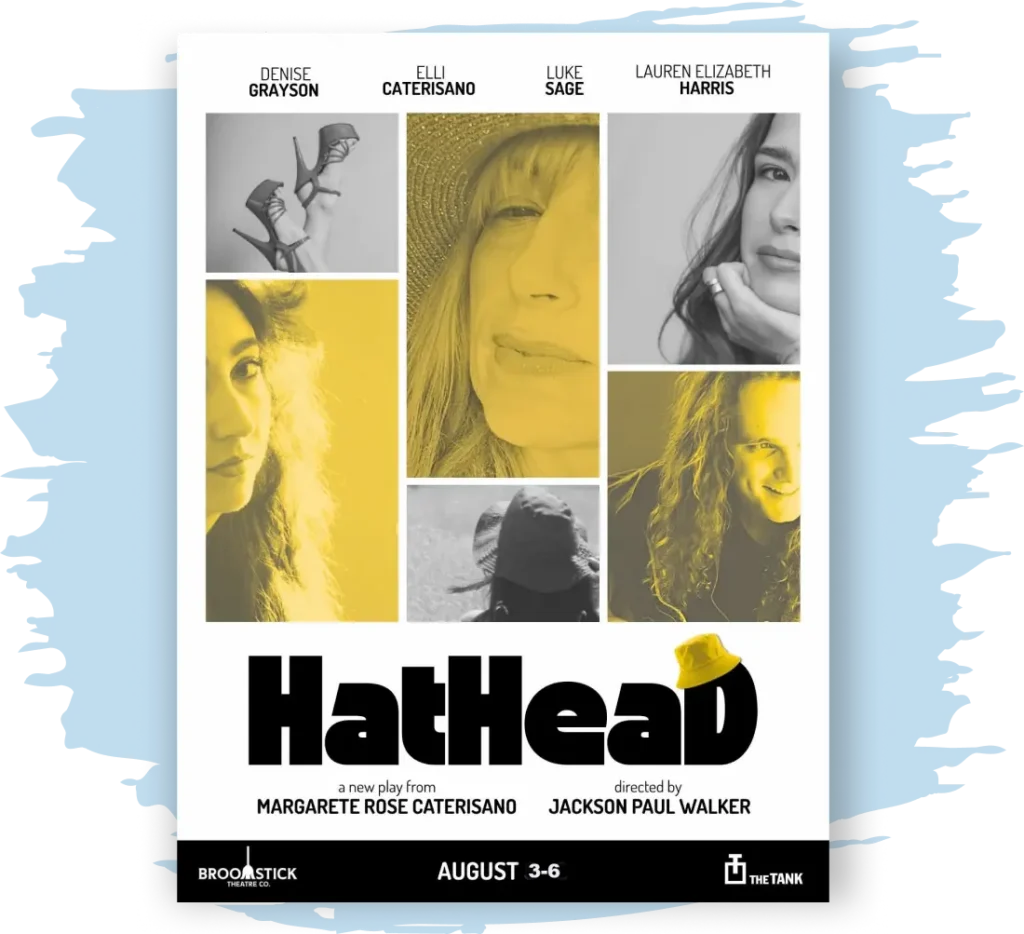
HatHead, produced by Broomstick Theatre, is a play comprising five 10- to 15-minute plays that revolve around a family dealing with the issues connected to the loss of one parent, and the advancing illness of the remaining parent.
HatHead begins shortly after the death of the father to Nell and Robert. During the year that follows the father’s death, Denise, his wife, begins to experience symptoms that suggest that she may be suffering from early-onset dementia.
Because I write a lot of plays with mother/daughter issues, I began the 10-minute play, HatHead, as a moment between a mother and her daughter. I liked the way the scene developed, and decided to expand the play to include Denise’s son and his partner.
The play focuses on Denise’s children, particularly her son, Robert, who elects to stay close to his mother in order to care for her. We meet Robert’s partner, Joanna, who becomes the playwright’s mouthpiece in the last scene of the play, when she describes “the real circle of life” as the inevitability of the necessity of the children to become the caregivers in the lives of their parents.
The play jumps back and forth in time to allow us to juxtapose the vibrance of the Denise before dementia and the Denise who later dips in and out of reality. Throughout the play are glimpses of little moments that illustrate a more comprehensive view of familial loss connected to dementia and the effects of the onslaught of dementia on all members of a family.
My hope is that audience members who see themselves in these characters can give themselves some grace for having to deal with the relentless, pernicious nature of the illness.
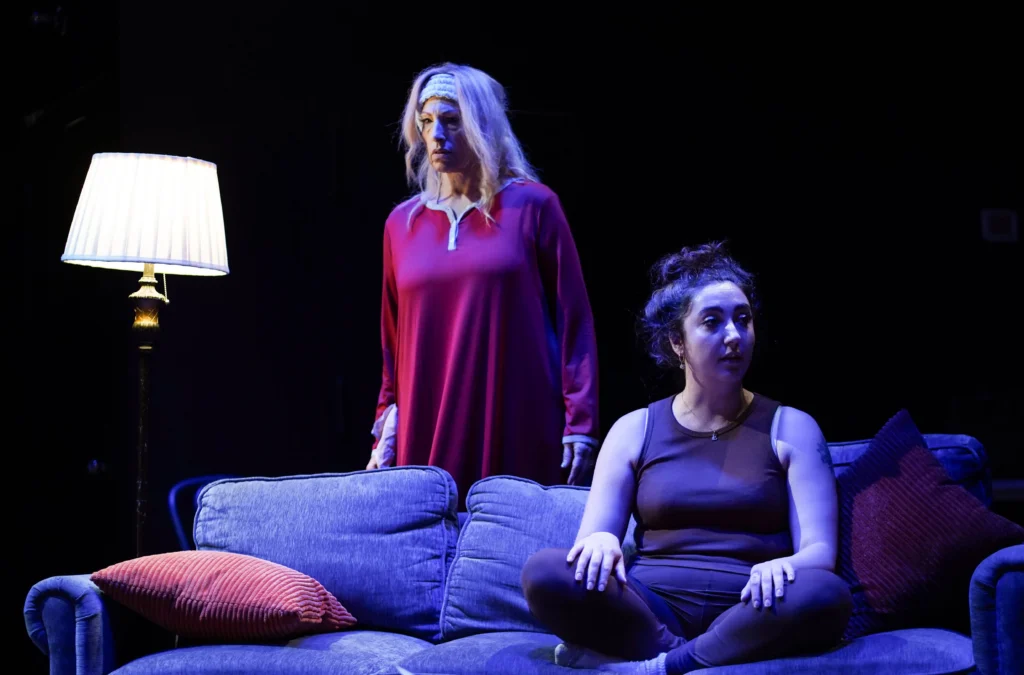

HatHead is a play that interweaves short stories that make up the lives of one family living with dementia following the passing of the father and how they move forward together. Photographer credit: Danielle DeMatteo
Who initially inspired you to grapple with dementia?
Like many of the people who have read and commented on HatHead so far, I had a grandparent who suffered from the disease. My own mother, Ruth Ford Pyfrom, stayed sharp as a tack until she died at 92, but I remember her grief over my grandmother, Winnie Ann Ford, and the guilt she felt at having to find a place where she might have 24-hour-a-day care.
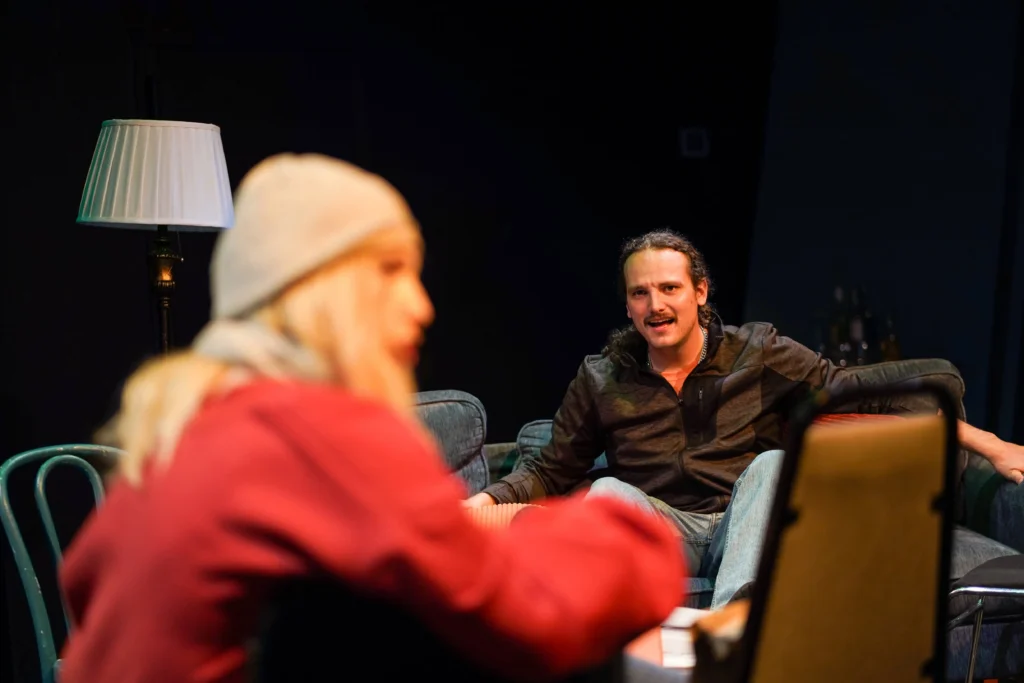
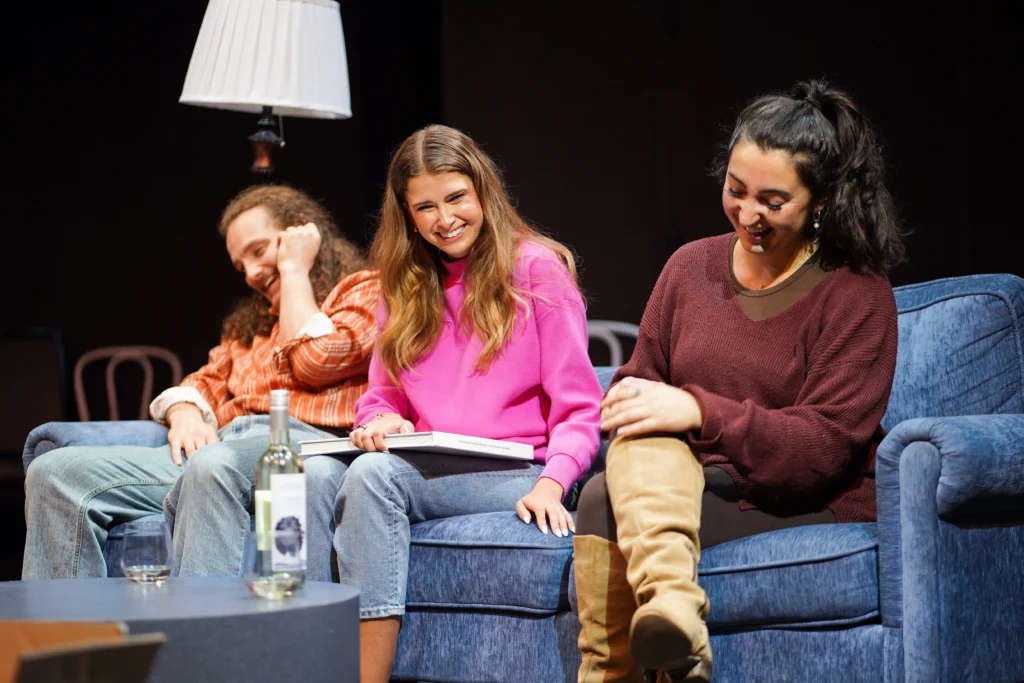
Photographer credit: Danielle DeMatteo
How has working on dementia-related art changed you?
As horrible as the disease is, I am not as afraid of it as I was when I started writing the piece. I am almost 66 years old, and I have reached a point in life where I have to start thinking about the end of my life.
Like many members of my own family (my mother had 8 children), I was terrified of the prospect of “losing my mind.” But the truth is that my children are poised to switch roles and become my parents at some point in my life. I no longer view that as an indignity; I am grateful that I have people in my life who care.
I think the road toward the end of life is easier if you have someone who is strong enough to care.

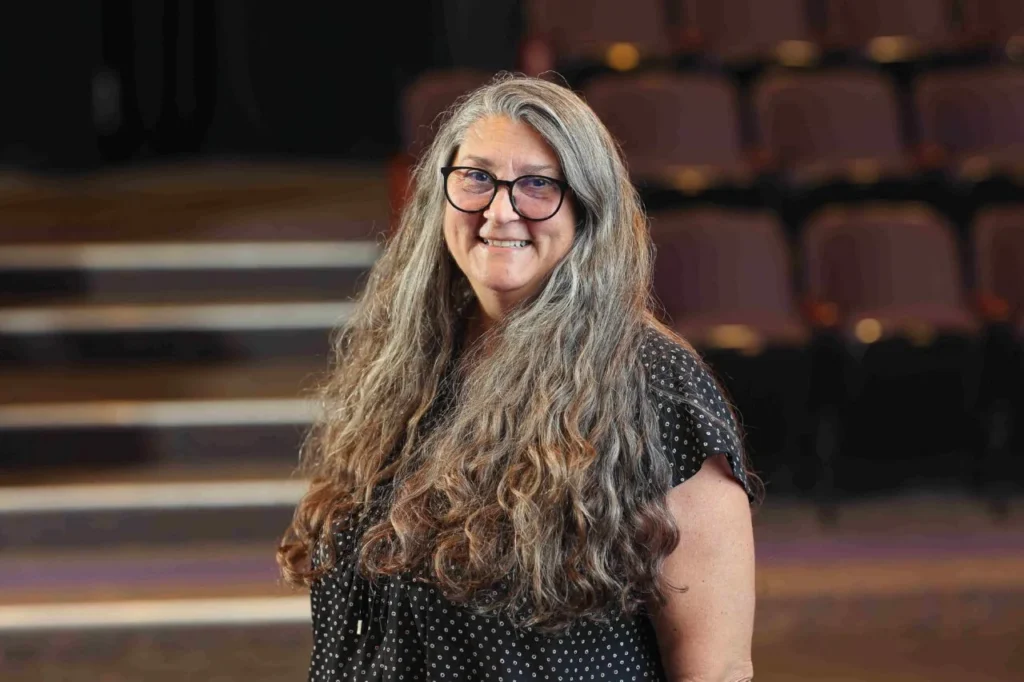
How has HatHead been received?
Audiences have been receptive to the play.
I have also had very good responses from people who have read the play. Most of us have dealt with family members who were afflicted. (Besides my grandmother, my aunt, Rose Everitt, was also living with the disease when she died.)
Among the positive feedback, one of the actors told his partner that he was no longer resentful of his grandmother for succumbing to the disease, because of one of the lines in the play. The line refers to Denise and claims that she dealt with dementia in as graceful a way as possible when “suddenly you felt the sand shifting under your feet and everything you knew was snatched away leaving you adrift on a sea of unfamiliarity.” One of the audience members also told me that this particular line resonated with her.
Others told me that the discussions the siblings have after Denise’s death regarding the carrying of guilt juxtaposed against feelings of relief were cathartic.
Again, my hope is that audience members and readers who see something of themselves in the characters will be able to give themselves some grace for how they may have dealt with family members afflicted with the disease.
Find more on HatHead and its recent showing here, and Broomstick Theatre Company on its website as well as Instagram.