
What is the Joy Family, and how are you creating and engaging those living with dementia?
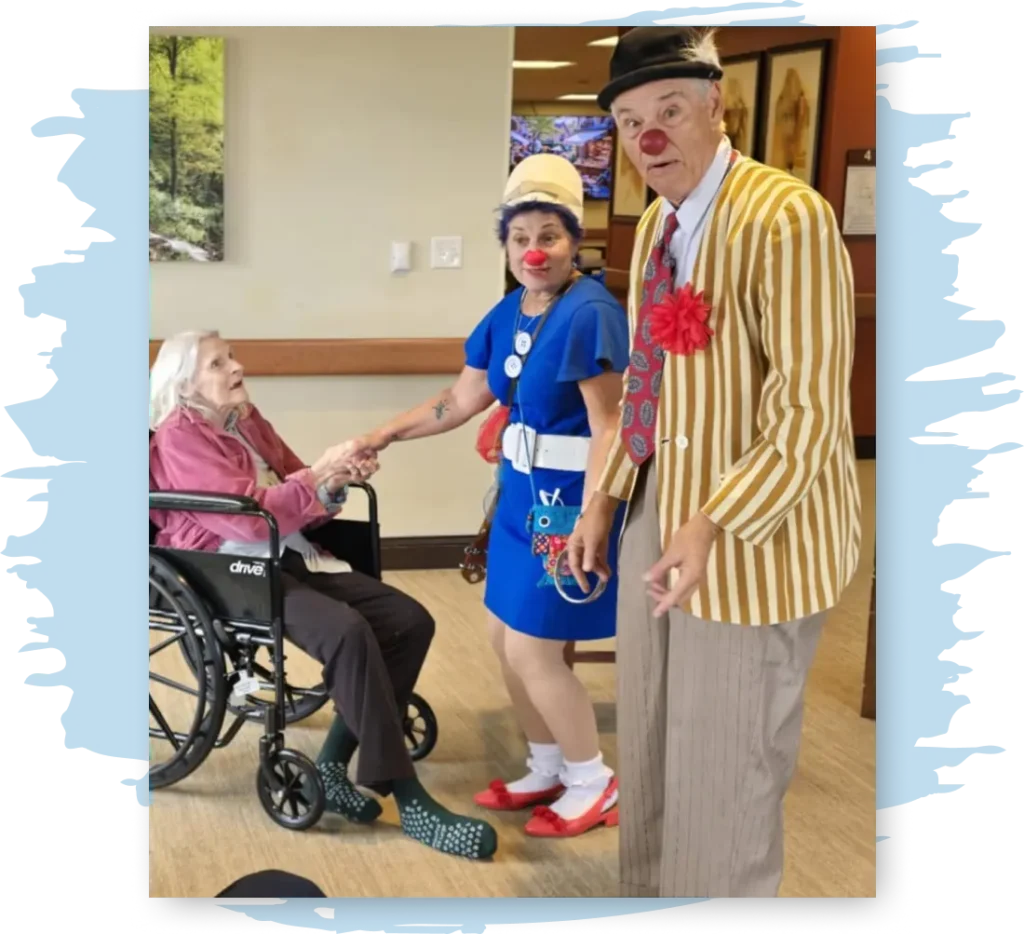
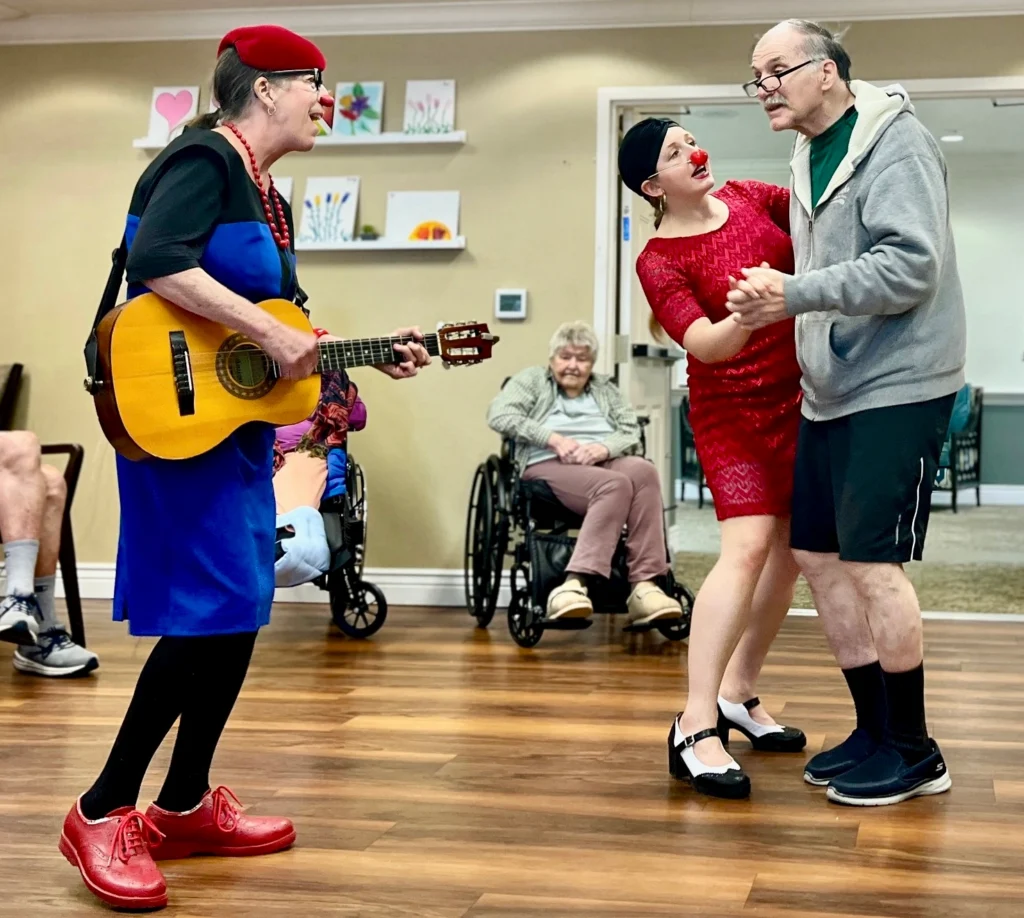
Laughter League’s the Joy Family is a family of professional comedic performers who are trained to work in healthcare environments and with vulnerable populations. Our engaging characters use improvisation, physical comedy, music and magic to connect with their audience and bring focus to each unique interaction.
Our visits transform the care environment and offer an opportunity for patients, families and staff to surprise themselves, interacting with the characters and with each other in new ways.
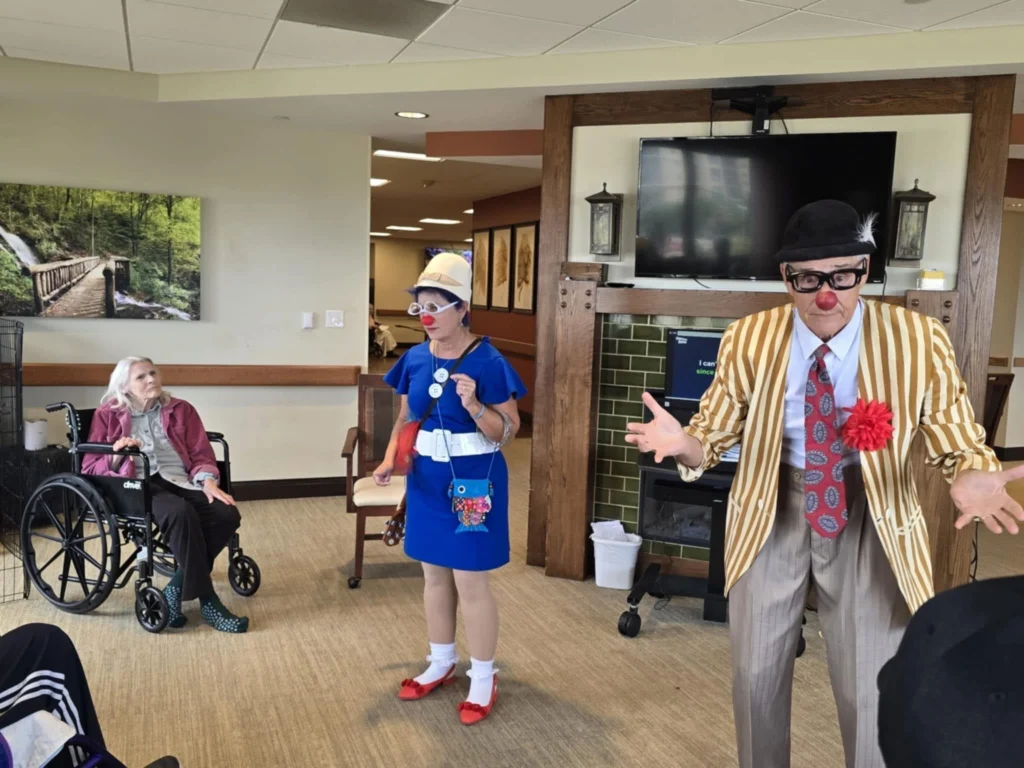
The Joy Family performers appear as an extended family of siblings, cousins, and neighbors. We come as characters from the ’40s, ‘50s and ’60s, representing the era residents identify with most. Our interactions can sometimes take the shape of a short variety performance, but more often are fully improvised visits based on the needs and input of the residents. Quite often, families and staff get caught up in the action as well. We meet people where they are at that moment.
We work in close partnership with the medical teams and therapeutic recreationists who care for seniors and people living with dementia. While our performers may entertain with short shows in the common areas, the main focus of our program is individual visits based on the needs of the residents.
Who initially inspired you to grapple with dementia?
My mother, Joy, had dementia for the last 7 years of her life. I watched as her friends slowly slipped out of her life, one at a time. They could not manage to continue being friends with her. This also impacted my father, who was her caretaker. They were lonely. My family also had trouble squaring who she had become with how they knew and loved her.
I had already been working as a therapeutic clown in children’s hospitals when she started her decline, and I found that the tools of improvisation, observation and listening allowed me to continue having a great relationship with my mom.
It was really hard—hard to watch her slip away, but harder to see others discard her as no longer a viable human. After she passed, our organization supported me in creating the Joy Family.
How has working on dementia-related art changed you?
Developing the Joy Family has been like opening up a whole new chapter in my work as a live performer. In the children’s hospital, we parody the doctors; we are “clown doctors.” But in the dementia care setting, that would never work.
We have developed an approach to the work that includes our artists appearing as characters from the ‘30s, ‘40s and ‘50s, which really resonates with most people with dementia today. We bring music from the era, and we interact with them individually, seeking to find out who they are in that moment, and to go on a journey of play and fun with them.
We all wear red noses as this is a physiological focus point for people living with dementia. Our goal is to engage and empower the residents by meeting them where they are.
How has the Joy Family been received?
It is a great passion of mine to honor my mother by creating a program that will give back to people living with memory decline in a way that I think she would find delightful.
Being able to put a smile on the faces of those facing dementia and Parkinson’s means a lot to the performers—and the residents.
One review, from Biaggia Weston, Activities Director, Sunrise East 56th in NYC, says:
“The people at Sunrise are not just residents. They are my family and they are my friends. So seeing them have a smile on their face after the Laughter League comes and leaves it, it makes me cry. Happiness is like the best medicine.”
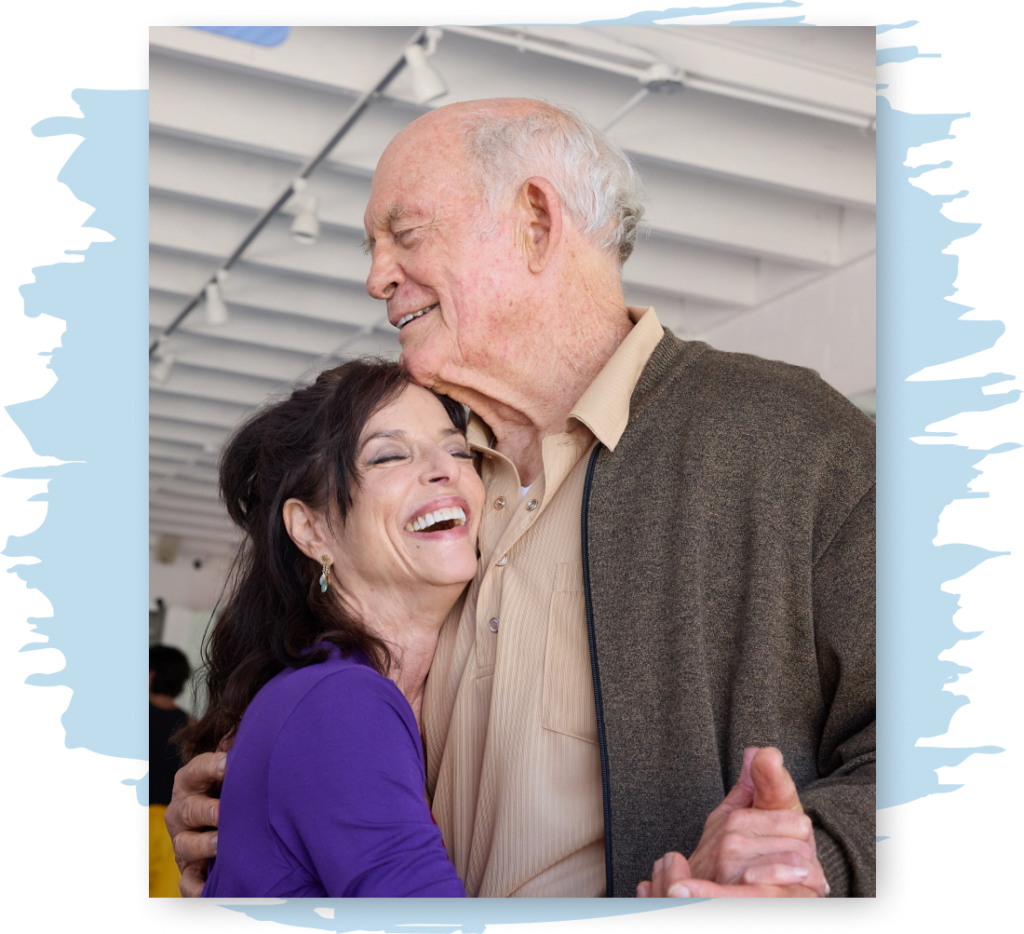
This work is dedicated to: My mom, Joy Riley, who lived to be 91 years old. She raised 5 kids and had 12 grandkids and 18 great grandkids. She and her husband of 63 years, Dale, taught dance for 30, and were known as the kindest, most loving people to friends and family alike.
Find more from Laughter League on the web, Facebook, Instagram, LinkedIn, and TikTok.