
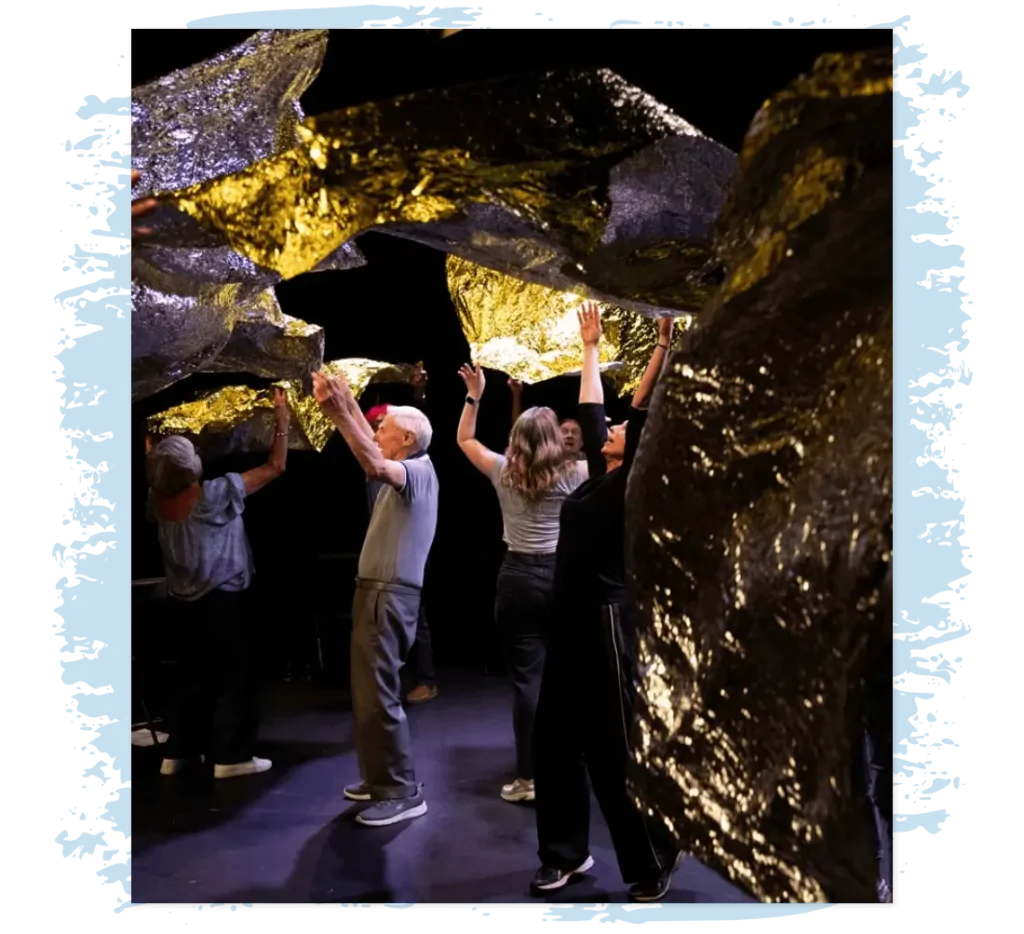
What is Goldspun and how did it come to be?
Goldspun is a short dance film from Moving Minds, a not-for-profit creative health organization that I run, York Theatre Royal, and filmmaker Jessica Jenyns. Goldspun explores the body as a site of memory, imagination and transformation. The film blends dance, storytelling and visual poetry to create a textured portrait of lives that continue to shimmer with agency and expression.
The title is inspired by the idea of spinning gold from ordinary moments. The performance invites audiences to reimagine ageing and dementia as a space for creativity, connection, and play.
The work is part of Moving Minds’ wider mission to challenge the stigma around dementia through joyful, person-centered creativity. As an organization, we use dance and performance to inspire empathy, reframe narratives and advocate for a more imaginative, inclusive and compassionate approach to care.
Projects like this are vital in changing public perceptions. They invite audiences to witness people living with dementia as artists in their own right, not defined by a medical label but by their presence, vitality and imagination. They remind us all that creativity is a fundamental human capacity—one that does not vanish with memory but continues to flourish in new and surprising forms.
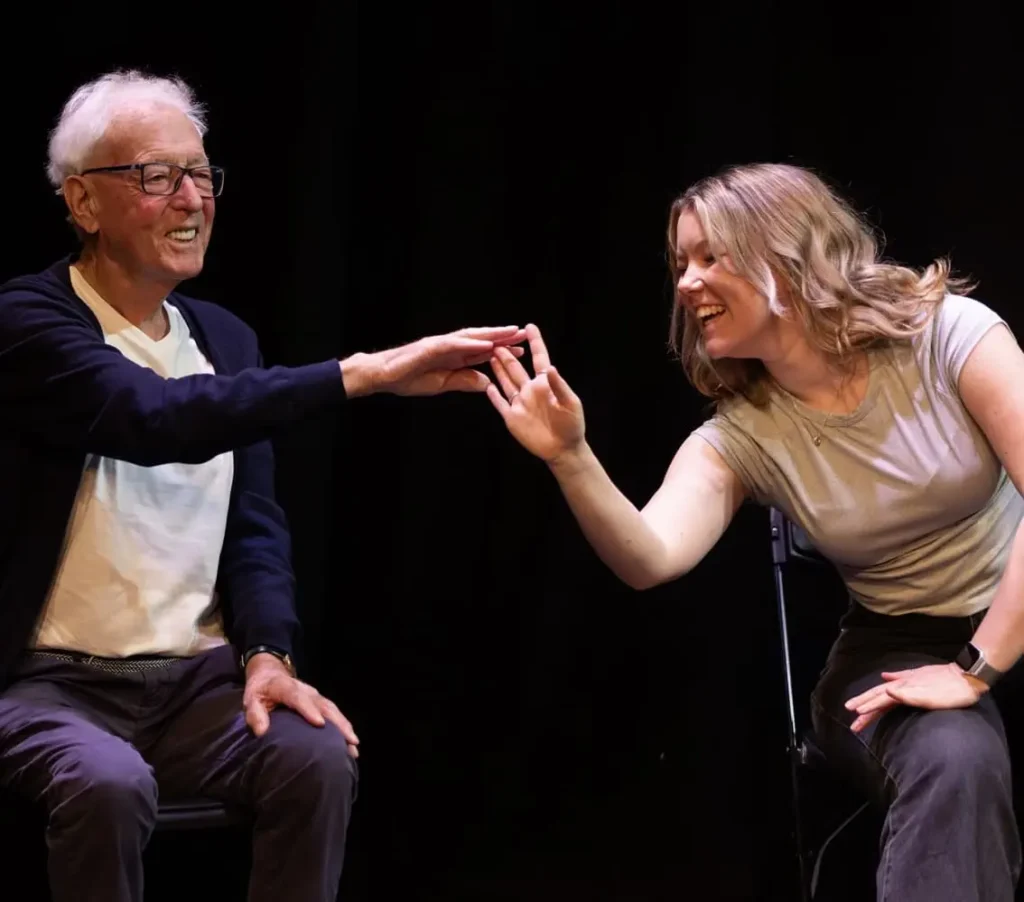


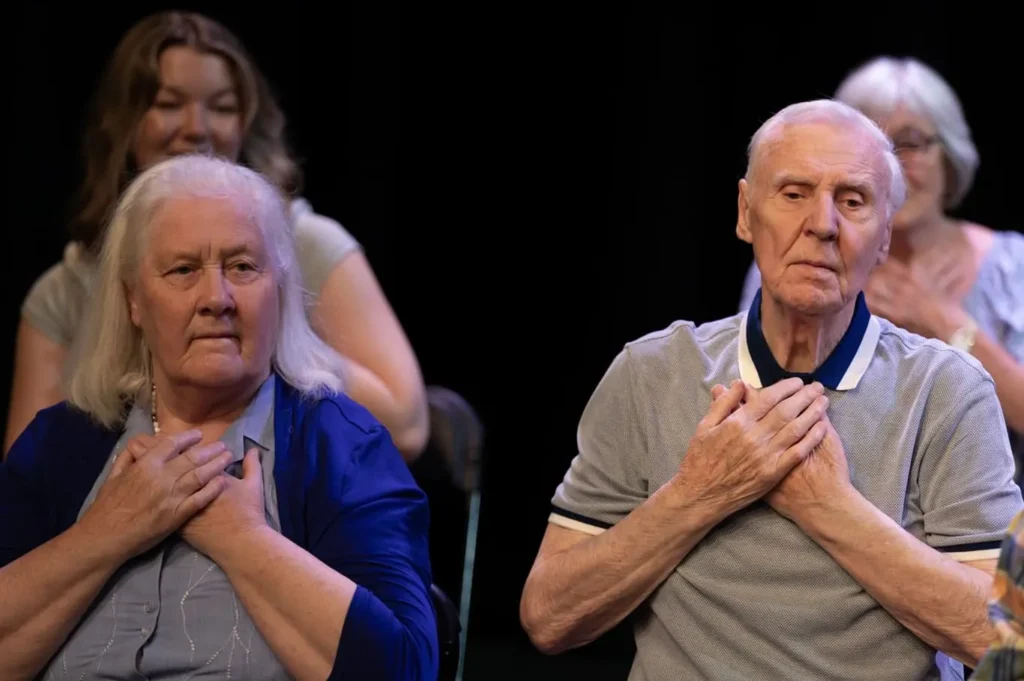
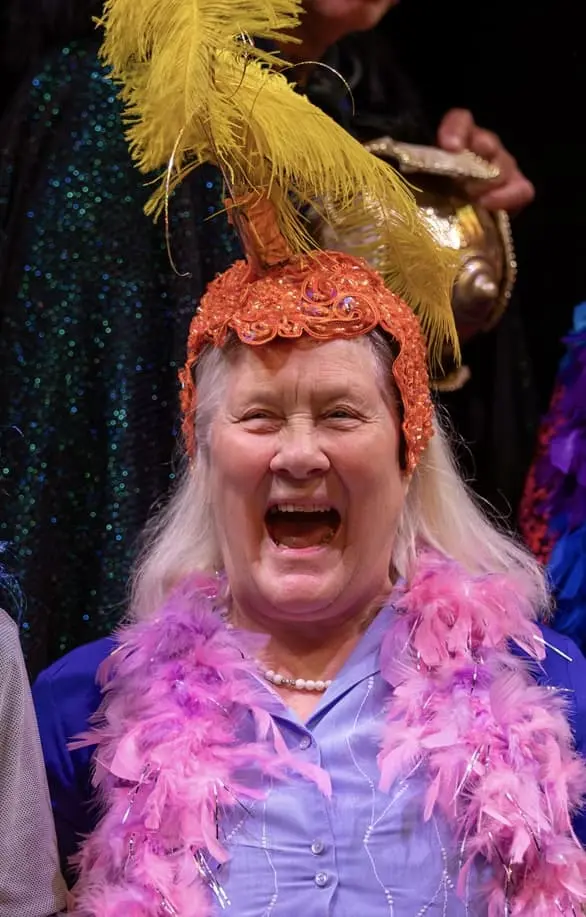
What initially inspired you to grapple with dementia?
As Founding Director of Moving Minds, I started the organization as a research project, partly due to my professional interest in this area—as an artist with a background in dance and theater and a university lecturer for 20 years in arts and social justice—but also due to personal experience. My paternal grandmother was diagnosed with dementia, and I witnessed how difficult it was for my dad to find a way to stay connected and maintain a meaningful relationship with her. I started to listen to some of Gran’s favorite music with her and to watch for and to build on the small dances I could see happening. In these moments, she was alive, vibrant, creative and connected.
How has working on dementia-related art changed you?
Working with people living with dementia has reshaped how I see both choreography and ageing. Too often, conversations around dementia are framed only in terms of loss and decline.
In the studio, though, I witness something different: moments of creativity, humor, tenderness, and presence that exist beyond linear memory. These encounters have taught me to look at the ageing body not as a diminishing resource, but as a living archive that is full of wisdom, stories, quirks and expressive potential.
Choreographically, it’s pushed me to value spontaneity, improvization and the unexpected gesture, rather than striving for polished uniformity. Ageing, like dance itself, is not a straight line but a shifting rhythm. It’s sometimes fragile, sometimes fierce. To reimagine the ageing body is to honor it as capable of connection and artistry, rather than reducing it to what has been lost.
How has Goldspun been received?
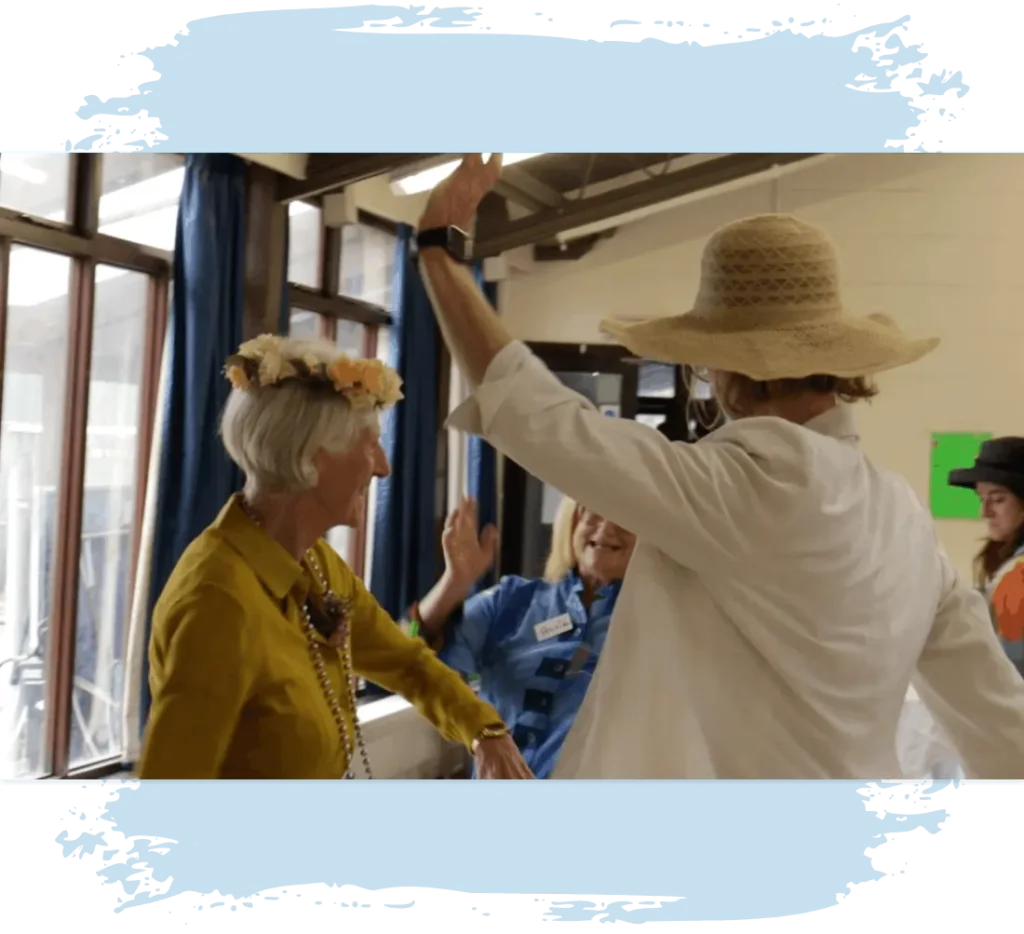
The response to Goldspun has been deeply moving. Participants spoke of the joy and freedom they felt in contributing to something creative and celebratory. For many, the process of being filmed was empowering—an affirmation that their gestures, playfulness, and imagination were worthy of being captured and shared. One participant described the day as “liberating,” while another said it reminded them they could still surprise themselves.
Audiences, too, have responded warmly. Early screenings and sharings have prompted reflection on how rarely people see dementia represented in this way—vivid, joyful, and full of life. Viewers remarked on the tenderness of the film, its sense of togetherness, and its ability to challenge assumptions about what dementia means.
Find more from Elaine Harvey, Moving Minds, and Goldspun on the organization’s website.