
What is Beyond Memory, and how did it come to be?
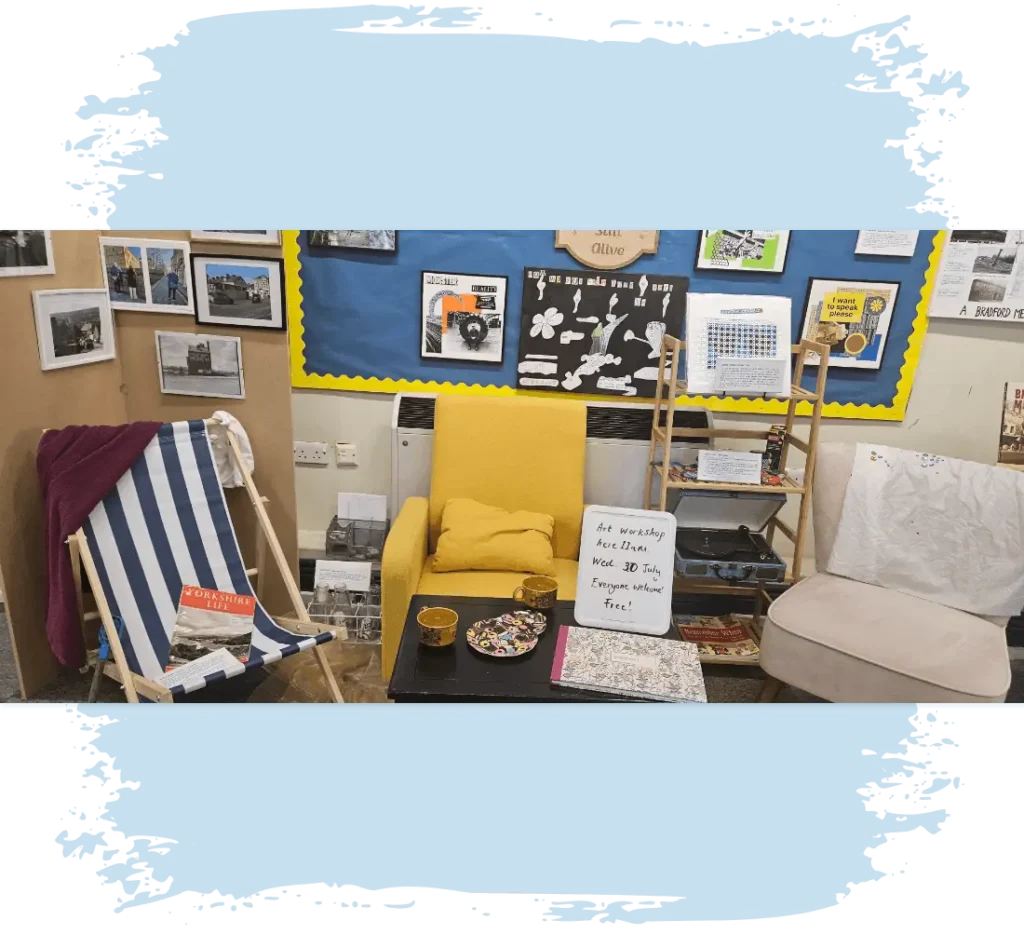
Beyond Memory, from Tumbling Hill Productions, is a mixed-media arts exhibition/installation co-created with the Pathways support group for people living with young-onset (or early-onset) dementia and their families (Bradford District, United Kingdom).
The exhibition involves visual arts (photography, film and collage) and creative writing, as well as performance elements (storytelling, improvisation and reading aloud). Over the lifetime of the project, 3 themes emerged (growing up and coming of age in Bradford, seaside holidays, and life on a desert island). The exhibition mirrors these themes, centering on 3 chairs, each of which represents 1 of the themes, an armchair from a regular living room, a pink chair shaped like a shell and a deck chair.
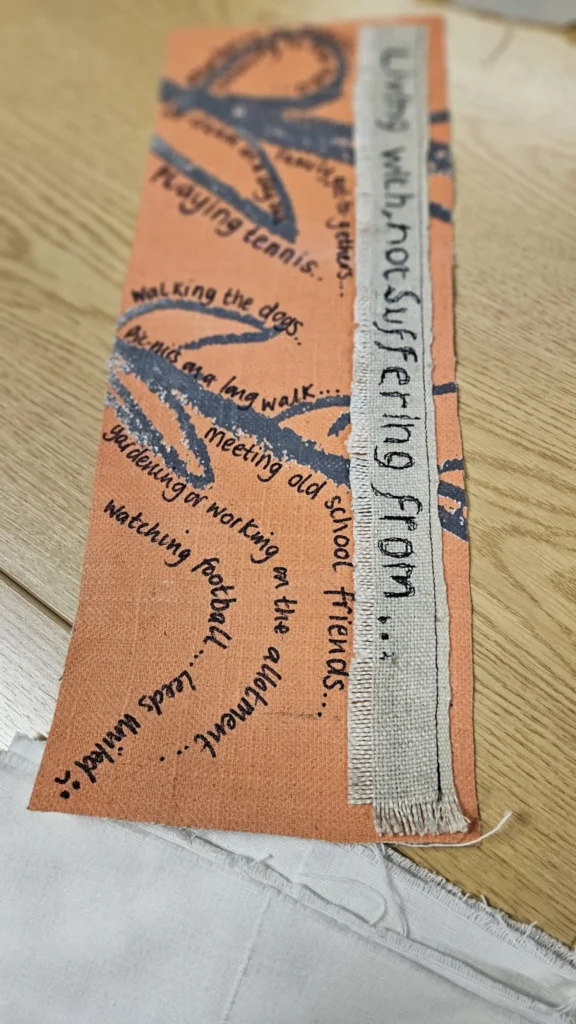
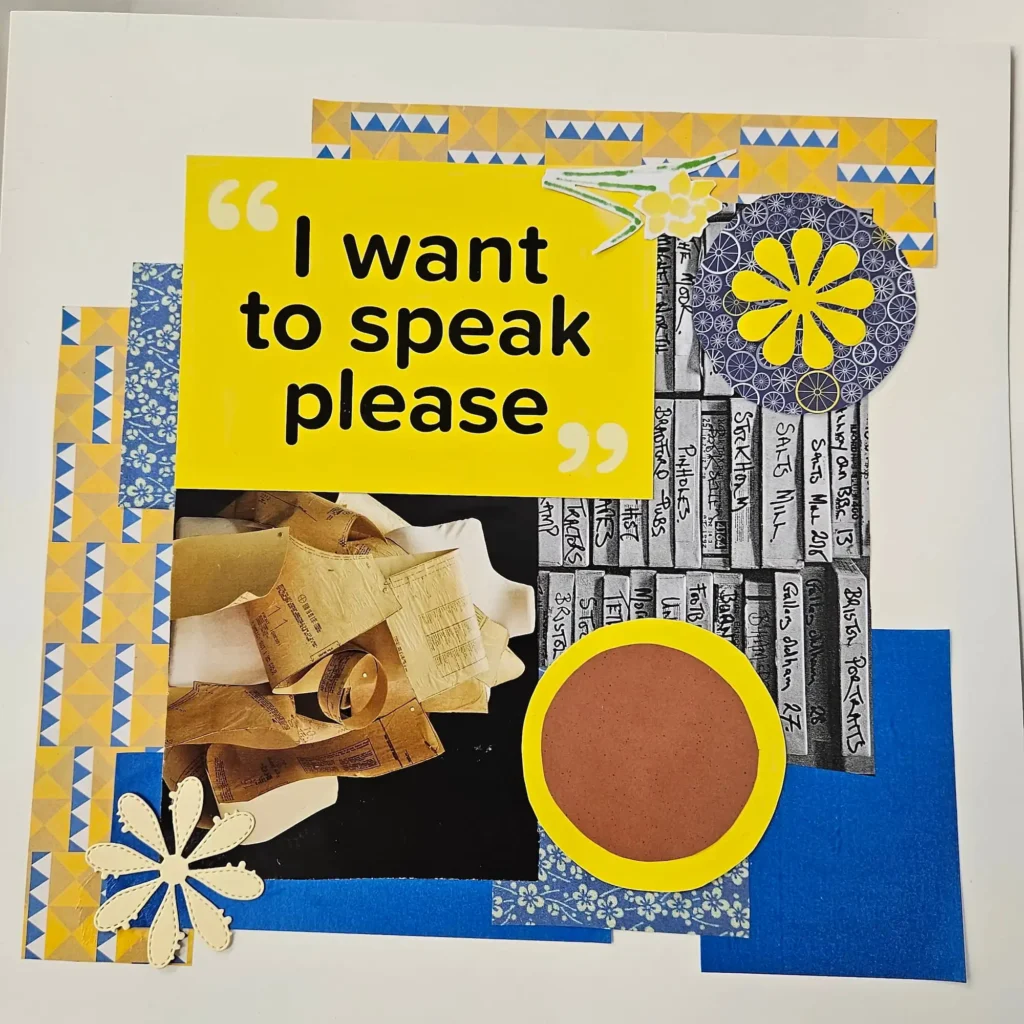
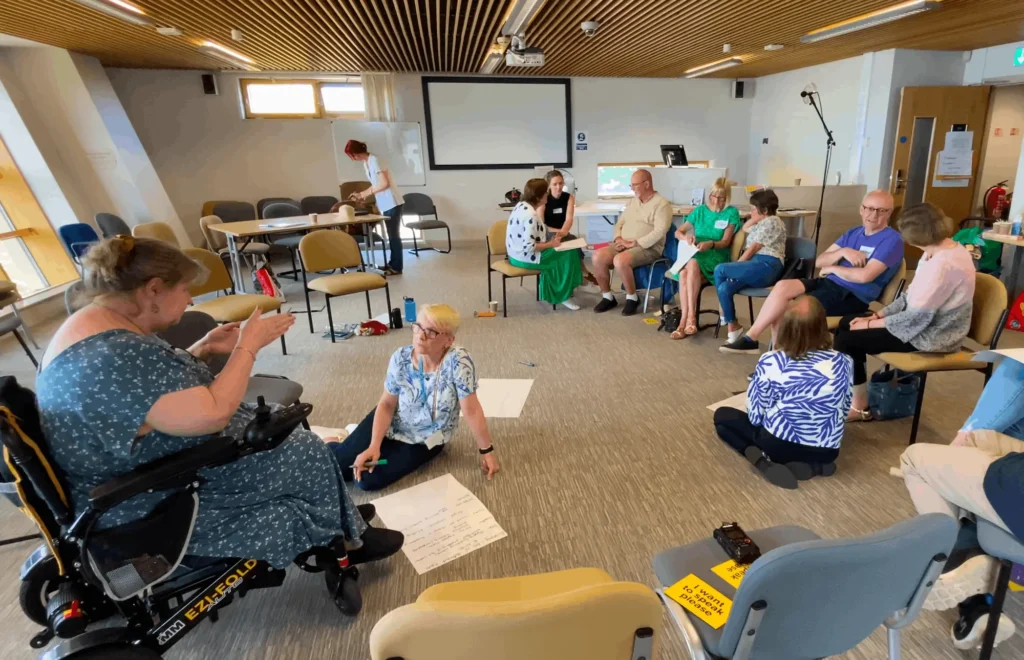
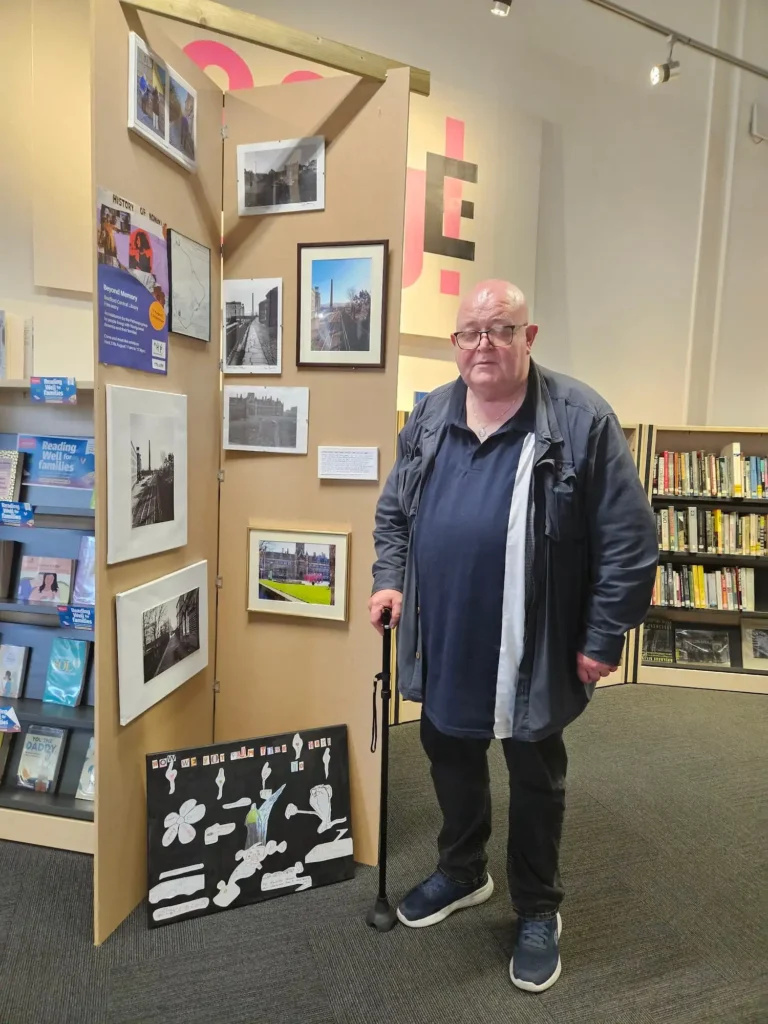
The co-creation took place over 18 months, in concert with the Pathways support group made up of about 2 dozen people including those living with young-onset dementia, family members and volunteers. We spent the first year making work for the exhibition during regular monthly meetings and 3 additional workshops, where, at times, art practitioners came in to collaborate. One workshop we held was based on the idea of living on a desert island, which resulted in a music playlist and a fabric collage of a desert island with found objects incorporated into it. Another activity captured by a Pathways community member, Michael’s, interest: Returning to the places shown in Ian Beesley’s Life Goes on Exhibition, depicting Bradford in the 1970s and 80s, and photographing them in present day. Those photographs can be seen as part of the exhibition.
The whole project was recorded in order to capture what was happening in the moment. In a beautiful moment of connection during a session, 2 men living with young-onset dementia discovered they had both been bus drivers. They had a conversation about their shared experiences in this space of community and creative collaboration. (The final short film can be viewed here.)
The exhibition aims to show the importance of imagination and creativity when living with dementia. Beyond Memory is part of a portfolio of projects run by Tumbling Hill Productions, which all have a focus on dementia and/or are co-created with people living with dementia.
What initially inspired you to grapple with dementia in your art?
I was lucky enough to begin my long career in dementia studies working with the late Professor Tom Kitwood at the University of Bradford, which was an inspiring time and place. Over the years both my teaching and my research at the university were shaped by my interest in the arts and humanities, and in interdisciplinary approaches more generally (for example, I have used principles drawn from psychogeography to explore the connections between place memory and dementia). I believe strongly in the value of the arts for exploring cultural meanings of dementia, as well as enhancing lived experience.
How has working on dementia-related art changed you?
I’m fascinated by what art can do for dementia: the possibilities of drawing on the arts to make it possible for people with dementia to participate in qualitative dementia research, to teach dementia studies, and to contribute to practice and service development (for example, use of drawing, photography and walking to enhance or replace standard research interviews).
But the artist part of me is equally fascinated by what dementia can do for art: the novel world views that dementia often opens up, the different ways of seeing, the creative uses of language, the challenges to orthodoxy, and the acting out of emotions.
I have previously used the words of 4 women living with dementia in a real-world care facility to create a piece of verbatim theater, titled The Other Side of the Wall, and continue to find the possibilities for this kind of work exhilarating.
How has Beyond Memory been received?
The Pathways group members are keen to challenge the negative and stigmatizing view of dementia perpetuated by the media and have been enthusiastic about taking part. They liked the use of different arts media, and noted that this often gave a different perspective or triggered memories that would not otherwise come to light; for example, as 1 participant said, “When you look at pictures like this it triggers all kind of things; not just what’s in the photos but other things, too.”
The artists who led the workshops have been strongly positive about the experience; for example, one described the combination of words and music that came out of an improvisation workshop as “rich magic,” while another said, “I’m excited about the possibilities the exhibition brings to represent the group’s vibrant imaginations in a different form.”
This work is dedicated to: Former members of Pathways support group who have passed away and are remembered in the hanging wooden hearts as part of Beyond Memory.
Find more from Pathways support group on Facebook.